Showing posts with label DIY. Show all posts

Saturday, 13 August 2022

Modification of a Premier bass drum (1)

This project is a consequence of a larger one; namely, to provide myself with the proper drums to recreate as close as possible the original sound, character and looks in I. Stravinsky´s "The Soldier´s Tale".

For the bass drum I used a 28"x12" Premier (model 188) from the 70s. Here you have a photo from the catalogue and a technical description:


© Premier Co.

© Premier Co.


It was finished in "Burgundy Pearl" and it featured "Everplay" heads:


© Premier Co.

© Premier Co.


Here you can see the bass drum when I used it in "Pagliacci" at the teatro Campoamor in Oviedo:


© David Valdés


This is the bass drum ready to be modified. As you can see, the finish was not specially beautiful.


© David Valdés

© David Valdés


The first thing I did was stripping off the shell, a task which was not very difficult, as the wrap was glued only in a narrow band.


© David Valdés


The next step was sanding the shell until it was perfectly smooth. Once done, I applied several layers of tung oil.


© David Valdés

These are the original lugs. Although I like very much their "Art Déco" style and I have already used identical lugs on some of my drums, it was not the look I was looking for (apart from the fact that they were not in perfect condition).


© David Valdés
 

In order to get a more antique and simple look I got some tubular lugs at STDrums:


© David Valdés

I also added some leather gaskets (STDrums) to avoid contact/friction noise. They look beautiful!!!


© David Valdés

Here you can see everything already mounted on the shell:

© David Valdés

© David Valdés


I then started working on the counterhoops. I got rid of the red wrap and the black paint (not from the central "channel" as it would get covered with the new wrap). I sanded them until they were perfectly smooth and, again, I applied several coats of tung oil. The next photo shows two different stages of the process:


© David Valdés


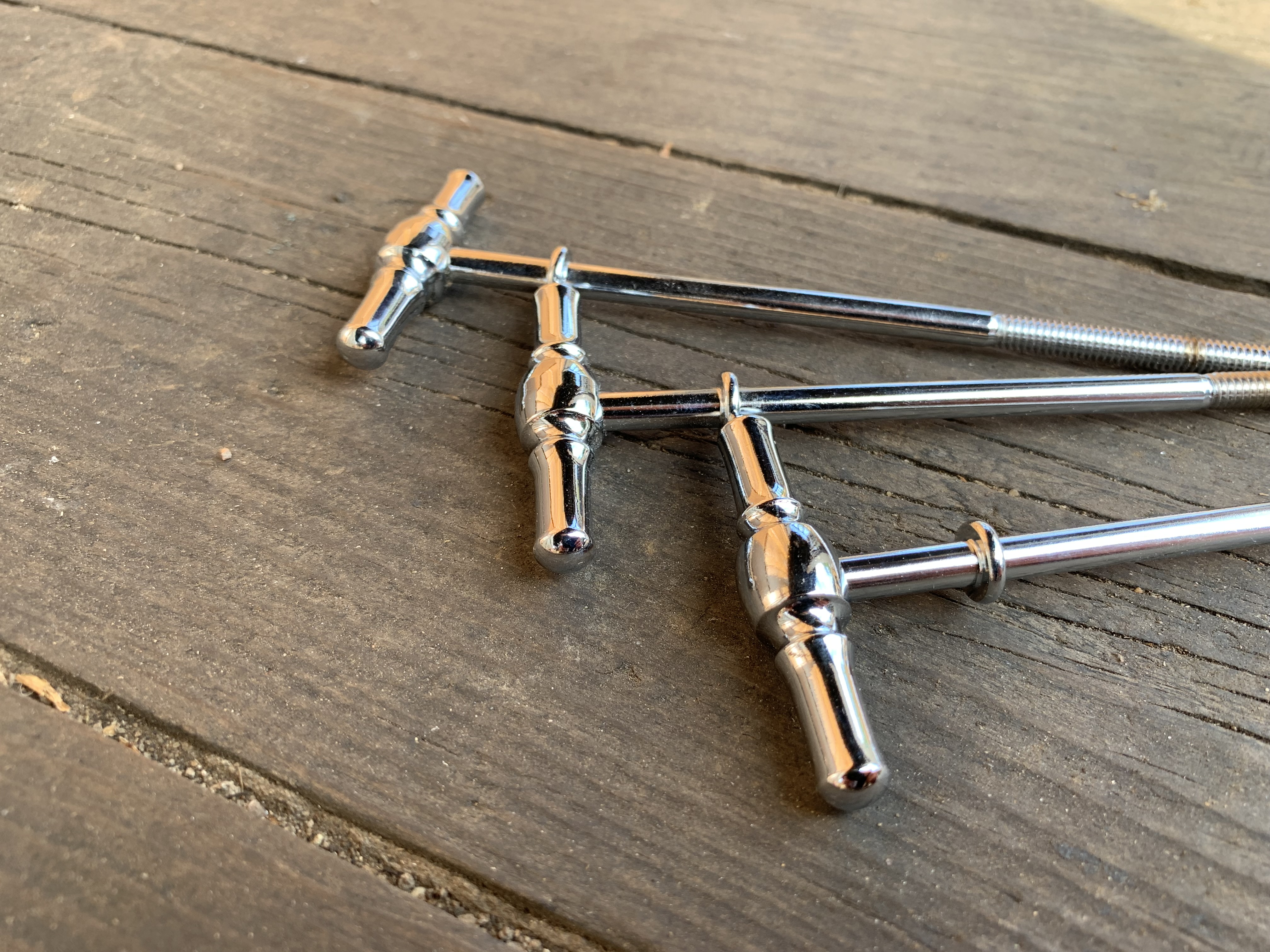
I glued a strip of white marine pearl wrap (STDrums) I had from previous projects. Because I was going to fit the drum with natural heads, I susbstituted the original square-headed tension rods with tap-style ones. Changes in temperature and humidity greatly affect natural heads, so you have to constantly adjust the tunning of the bass drum. Tap-style rods are much more practical. I got these "Paris style" tension rods at STDrums: 
 

© David Valdés


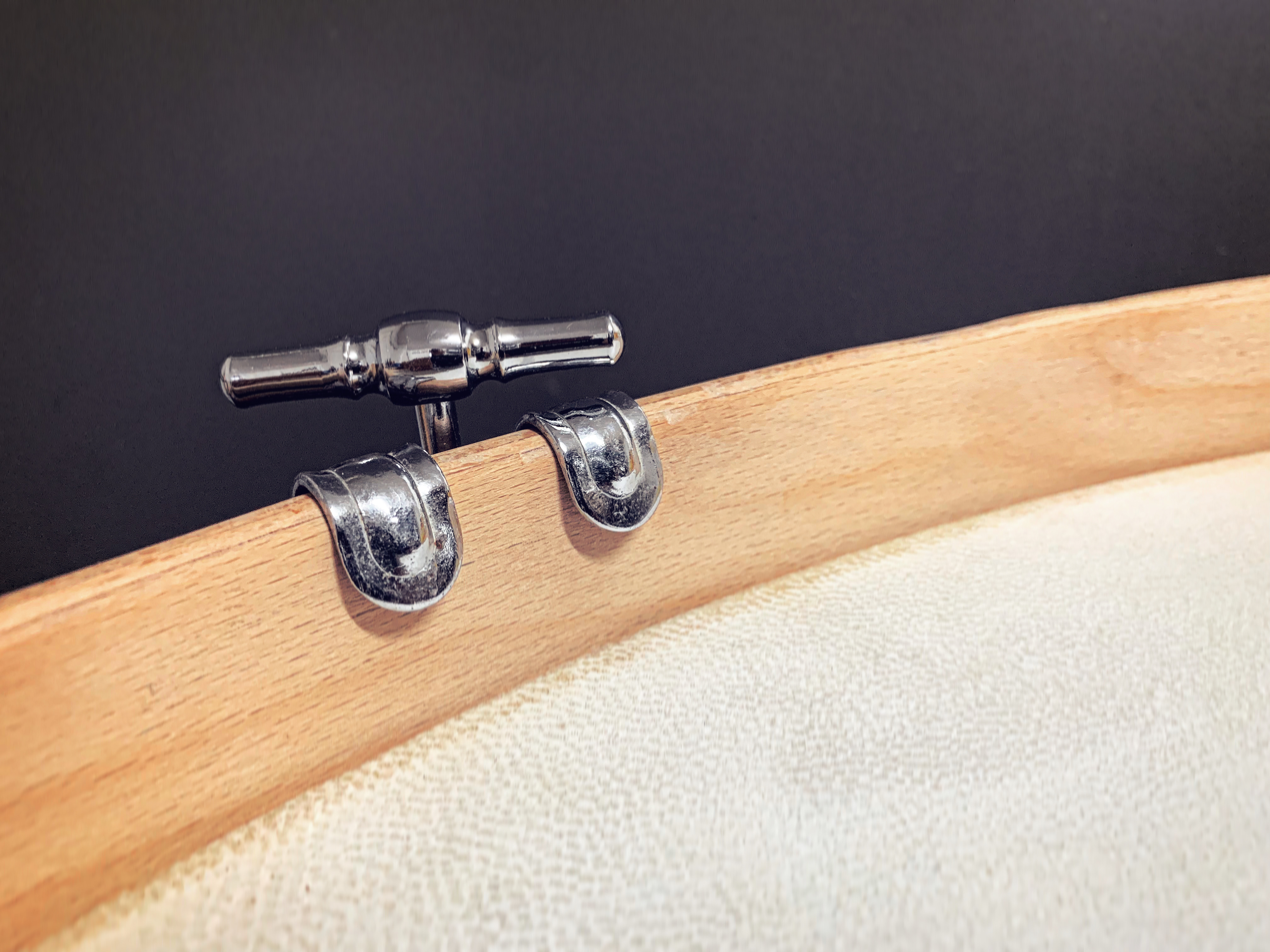
Here you can see the original claws and the new tension rods on the counterhoop:
 

© David Valdés


With everything ready, I only had to put the goat skins on (Baena Sonido) and mount everything. Here you have some photos:


© David Valdés

© David Valdés

© David Valdés


This bass drum features the measures, character and look I was looking for for my project; on top of that, it sounds fantastically well! Also, apart from being a perfect chamber-music-bass-drum, it can also be incorporated into a trap set (remember this article on Milhaud´s concerto), so it is doubly useful.

A future article will show the different mounting possibilities of this bass drum. Stay tuned, as this has just began 😉.


…et in Arcadia ego.
© David Valdés

Saturday, 15 May 2021

My home-made Renaissance side drum.

A side drum is an ancient kind of large drum that was used in Europe by the landsknechts, mercenaries from the German area. Said troops fought on the side of the highest bidder, and they even were part of the Spanish infantry under emperor Carlos I.

Said drum was played to one side, under the arm pit, thus its name. It was played together with fifes and was used to march, transmit orders, entertain the soldiers...


This project starts with a 18"x18" Gonalca surdo which was crying for a new chance.


© David Valdés


I took all the hardware and the wrap off, leaving the shell in its "natural" state.


© David Valdés


18"x13" seems to be a normal size for these drums, so I cut the shell to nearly 14" in depth.


© David Valdés


Quite obviously, I kept the remainig shell, which is now an instrument I will write about in the future. Now it was time to cover the holes...


© David Valdés


...and to cut the protuding dowels.


© David Valdés


I sanded both sides of the shell so they were smooth and then glued a new veneer:


© David Valdés


The shell was ready. I then drilled two diametrically opossed groups of three holes to accommodate the pegs in charge of tensioning the snares. Six viola tuning pegs were inserted, which I drilled so the gut could pass through:


© David Valdés


I got two wooden counterhoops at Thomann, which I drilled (16 times each) at a 22.5º angle to facilitate the passing of the rope.


© David Valdés


I cut two snare gates in the resonant counterhoop for the snares:


© David Valdés


I made 16 ears using leather pads and ribbon:


© David Valdés


Everything was ready: the 16 ears, 22 metres of hemp rope (7mm. thick) and two goat heads (the batter one slightly thicker, both mounted on wooden flesh hoops) I got at Baena Sonido.


© David Valdés


Here you can see the pig tail, the knot that ends the roping and keeps the tension. See how the ends of the rope are covered with leather tape so they do not fray:


© David Valdés


A chain is "knit" with the remaining rope, which is attached around the lower counterhoop. This is how the drum looks like once roped:


© David Valdés


I made the snares using natural gut I also got at Baena Sonido.


© David Valdés


I passed the gut through the hole I previously drilled on the pegs, securing it with a figure of 8 knot (the gut was wet, so it was malleable and easy to work with).


© David Valdés
 
 
© David Valdés


© David Valdés


As a last detail I added to rope loops, which will be used to secure the cotton sling I will use to hang the drum from my right shoulder. See how the ends of the rope are covered with leather tape:


© David Valdés


This is how the finished drum looks like:


© David Valdés


© David Valdés


© David Valdés


© David Valdés


© David Valdés


© David Valdés


© David Valdés


© David Valdés


© David Valdés


© David Valdés


And this is how it is played:


© David Valdés


© David Valdés


Stay tuned, as I will soon publish a video featuring this drum. As always, I will be more than happy to listen to your comments, advises, opinions...


…et in Arcadia ego.
© David Valdés